Yes, Tesla brakes need maintenance—even though regenerative braking can help brake pads last significantly longer than those on traditional gas-powered vehicles.
Tesla vehicles still use conventional brake pads, rotors, calipers, and hydraulic brake fluid. These components require periodic inspections and occasional service to maintain safe, reliable stopping performance.
One of the biggest advantages of driving a Tesla is reduced maintenance compared to a traditional vehicle. No engine oil changes, spark plugs, or exhaust system repairs can mean fewer trips to the auto repair shop.
But there’s a common misconception among electric vehicle owners: Because Teslas use regenerative braking, their brakes don’t wear out.
That’s not entirely true.
Understanding Tesla brake maintenance, how regenerative braking works, and when conventional brakes need attention can help you avoid unnecessary repairs while keeping your vehicle safe.
How Does Tesla Regenerative Braking Work?
Regenerative braking is one of the features that makes driving a Tesla different from driving a traditional gasoline-powered vehicle.
In a conventional vehicle, pressing the brake pedal activates friction brakes that slow the wheels. Brake pads press against rotors, converting the vehicle’s kinetic energy into heat.
Tesla vehicles use regenerative braking to recover some of that energy instead of wasting it.
When you release the accelerator pedal, the electric motor can act as a generator, slowing the vehicle while converting some of its motion into electricity that is returned to the battery.
This provides two important benefits:
- Reduced brake wear: Because the electric motor handles much of the deceleration during normal driving, conventional brake pads and rotors may be used less frequently.
- Improved energy efficiency: Capturing energy during deceleration can help extend the vehicle’s driving range.
Many Tesla drivers become accustomed to what’s commonly called one-pedal driving, where releasing the accelerator provides enough deceleration for many everyday driving situations.
However, regenerative braking doesn’t replace the conventional braking system.
Does regenerative braking completely stop a Tesla?
Regenerative braking can slow a Tesla significantly, but its effectiveness depends on factors such as battery temperature, battery charge level, road conditions, and vehicle settings.
For example, regenerative braking may be reduced when the battery is very cold or nearly fully charged.
Some Tesla models and software configurations can automatically apply conventional brakes to provide more consistent deceleration when regenerative braking is limited.
Regardless of these features, drivers must always be prepared to use the brake pedal.
Your Tesla’s conventional brakes remain essential for emergency stops, situations requiring additional braking force, and other driving conditions where regenerative braking alone is insufficient.
Do Tesla Brakes Wear Out?
Yes. Tesla brakes eventually wear out, but the rate of wear can be considerably different from that of conventional vehicles.
Because regenerative braking reduces how frequently friction brakes are applied, Tesla brake pads can last longer than those on many gasoline-powered vehicles.
However, several factors influence how long your brakes will last:
- Driving habits: Aggressive driving, frequent hard stops, and performance driving can increase brake wear.
- Road conditions: Hilly terrain and repeated downhill driving may require more conventional braking.
- Vehicle weight: Tesla vehicles can be relatively heavy, increasing the demands placed on the braking system during hard stops.
- Regenerative braking availability: When regenerative braking is limited, the friction brakes may be used more frequently.
- Environmental conditions: Moisture, road salt, and long periods of limited brake use can contribute to corrosion.
- Vehicle maintenance: Proper inspections and timely service help identify problems before they become more expensive.
One important difference is that Tesla brake problems aren’t always caused by worn-out brake pads.
Sometimes, brakes that aren’t used frequently enough can develop problems of their own.
Why Tesla Brakes Can Develop Rust and Corrosion
Here’s something many new Tesla owners don’t realize: Regenerative braking can reduce brake pad wear, but it can also mean the conventional brakes are used less frequently.
In traditional vehicles, regular braking helps remove light surface rust from the brake rotors.
Because Tesla drivers often rely heavily on regenerative braking, their brake rotors may not receive the same frequent friction contact.
Over time, this can contribute to corrosion, particularly when vehicles are exposed to moisture or road salt.
Potential consequences include:
- Surface rust on brake rotors
- Uneven rotor surfaces
- Brake noise or vibration
- Corroded or sticking brake components
- Reduced braking consistency
- Premature replacement of components affected by severe corrosion
Light surface rust isn’t always a reason to replace the brakes. However, persistent corrosion, deep pitting, sticking calipers, or changes in braking performance should be evaluated by a professional.
Can Tesla brakes rust in Arizona?
Yes. Although Arizona doesn’t experience the same road salt exposure as northern states, Tesla brakes can still develop corrosion.
Moisture from rain, vehicle washing, monsoon conditions, and periods of limited vehicle use can contribute to surface rust.
For Tesla owners in Tempe, Mesa, Chandler, Scottsdale, and the surrounding Phoenix area, regular brake inspections can help identify these concerns before they become more serious.
What Does Tesla Brake Maintenance Include?
Unlike conventional brake maintenance, which often focuses on replacing worn brake pads, Tesla brake maintenance may place greater emphasis on inspecting components, checking brake fluid, and addressing corrosion.
Here’s what qualified technicians may evaluate during a Tesla brake service appointment.
1. Tesla Brake Pad Inspection
Even though regenerative braking reduces friction brake usage, brake pads still wear over time.
During an inspection, a technician can measure remaining brake pad material and check for uneven wear, cracking, contamination, or other concerns.
Replacing brake pads before they become excessively worn helps protect the rotors and maintain safe stopping performance.
2. Brake Rotor Inspection
Brake rotors should be inspected for:
- Excessive rust or corrosion
- Deep grooves or scoring
- Uneven wear
- Cracks or other damage
- Thickness below manufacturer specifications
Not every rusty rotor requires replacement. A professional inspection can determine whether cleaning, continued use, or replacement is appropriate.
3. Brake Caliper Inspection and Service
Brake calipers hold the brake pads and apply pressure to the rotors.
Because Tesla friction brakes may be used less frequently, corrosion or sticking components can sometimes become an issue.
Depending on the vehicle’s condition and manufacturer recommendations, brake caliper maintenance may include inspection, cleaning, and lubrication of appropriate components.
This work should follow Tesla-specific procedures.
4. Tesla Brake Fluid Health Check
Regenerative braking doesn’t eliminate the need for hydraulic brake fluid.
Tesla vehicles still rely on brake fluid to transfer braking force through their conventional hydraulic braking systems.
Over time, brake fluid can absorb moisture and become contaminated, potentially affecting braking performance and contributing to internal corrosion.
Tesla recommends a brake fluid health check every four years for many models, with replacement when necessary.
More frequent service may be appropriate under demanding conditions, such as heavy braking, towing, or repeated mountain descents.
Importantly, a brake fluid health check doesn’t automatically mean the fluid needs to be replaced. The decision should be based on the manufacturer’s recommendations and the fluid’s actual condition.
5. Brake Lines and Hydraulic Components
A complete brake inspection may also include checking applicable hydraulic lines, hoses, fittings, and related components for leaks, deterioration, or damage.
Although regenerative braking reduces wear on some components, hydraulic brake system integrity remains essential.
How Often Do Tesla Brakes Need Maintenance?
Tesla brake maintenance intervals depend on the vehicle’s model, model year, operating conditions, and maintenance history.
Tesla generally recommends servicing vehicles based on their specific maintenance requirements rather than following the same schedule used for conventional gasoline-powered cars.
Owners should consult the maintenance schedule and service information for their specific model and year.
A practical approach: Have your Tesla’s conventional brakes evaluated when warning signs develop, during appropriate routine maintenance visits, or when recommended by a qualified service professional.
7 Signs Your Tesla Brakes May Need Service
Because Tesla brake pads may wear slowly, it’s easy to overlook potential braking problems.
However, your vehicle may provide warning signs that something needs attention.
1. Squeaking or Squealing Brakes
Occasional brake noise can occur under certain conditions, including moisture or light surface corrosion.
However, persistent squeaking or squealing may indicate worn brake pads, contamination, corrosion, or other problems.
2. Grinding Noises
Grinding noises should never be ignored.
They can indicate severe brake pad wear, damaged components, or debris between braking surfaces.
Continuing to drive with grinding brakes can increase repair costs and compromise safety.
3. Vibration When Braking
If you notice vibration or pulsation during braking, your rotors or other brake components may need attention.
Uneven rotor surfaces, corrosion, or other mechanical problems can contribute to these symptoms.
4. Reduced Braking Performance
If your Tesla takes longer than expected to stop or the brake pedal feels different, have the system evaluated immediately.
Changes in braking performance can indicate serious problems.
5. A Soft or Spongy Brake Pedal
A soft or spongy pedal may indicate air in the hydraulic system, fluid concerns, or another brake system problem.
This isn’t something to ignore simply because your Tesla has regenerative braking.
6. Brake Warning Lights or Messages
Tesla vehicles use onboard monitoring systems to identify certain braking and electronic system faults.
If your vehicle displays a brake system warning, follow the instructions in the owner’s manual.
For serious braking warnings or abnormal pedal response, stop driving when safe and contact Tesla or a qualified service professional. Towing may be necessary.
7. Uneven Brake Wear or a Burning Smell
A sticking brake caliper or other mechanical problem can cause excessive friction and heat.
Warning signs may include unusual smells, pulling during braking, or one wheel becoming noticeably hotter than the others.
Have these concerns evaluated promptly.
How Much Does Tesla Brake Maintenance Cost?
One of the biggest questions EV owners ask is whether Tesla brake maintenance is expensive.
The answer depends on the service required.
Because regenerative braking can extend brake pad life, Tesla owners may spend less on routine brake pad replacement over time than drivers of comparable conventional vehicles.
However, individual repairs can still be expensive, particularly if neglected maintenance leads to rotor damage, sticking calipers, or other complications.
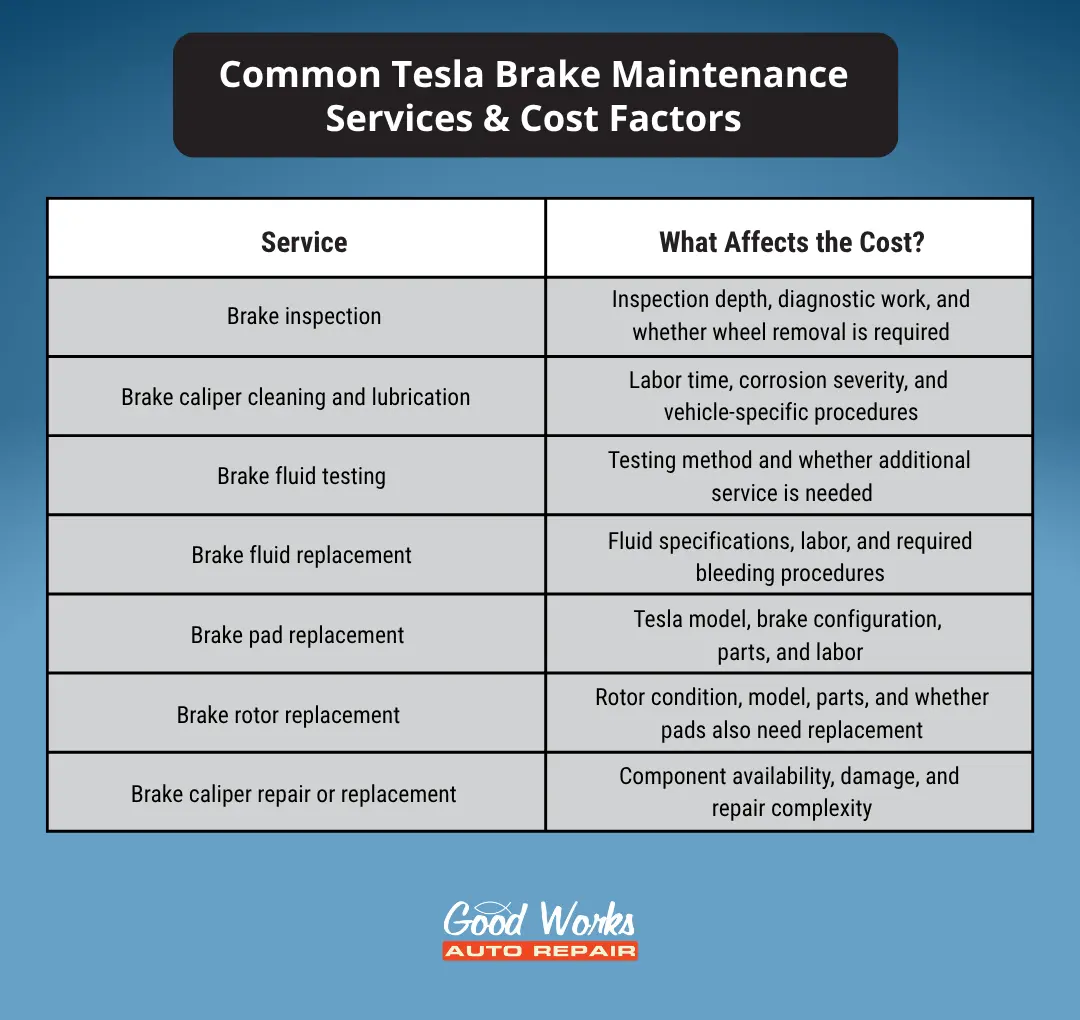
Because prices vary by Tesla model, location, parts, and repair facility, it’s best to request an estimate based on your vehicle’s actual condition.
A qualified independent repair shop may offer competitive pricing on certain routine Tesla brake services, but manufacturer-specific repairs or warranty concerns may be better handled by Tesla.
The best way to control Tesla brake maintenance costs is to address developing problems before they cause additional damage.
Can an Independent Auto Repair Shop Service Tesla Brakes?
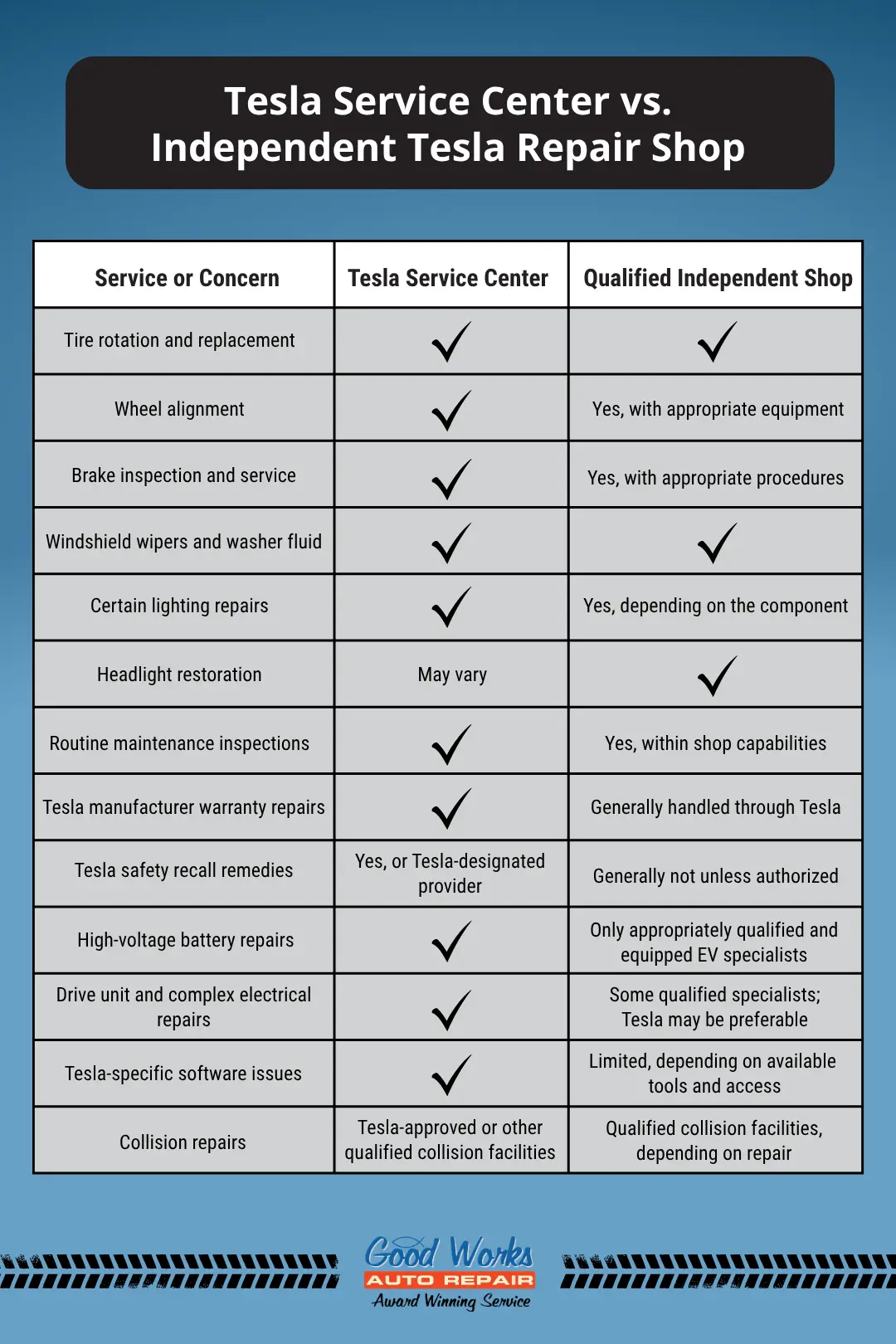
Yes. Qualified independent auto repair shops can perform many conventional Tesla brake maintenance and repair services when they have the appropriate tools, training, equipment, and access to vehicle-specific service procedures.
Routine brake inspections and certain mechanical brake services don’t automatically require a Tesla Service Center.
However, not every independent shop is equipped to perform every Tesla repair.
Complex electronic braking problems, regenerative braking system faults, manufacturer warranty work, and certain specialized repairs may require Tesla or an appropriately equipped EV specialist.
If you’re wondering whether to use a manufacturer service center or a local repair shop, check out this resource: Tesla Service Center vs. Independent Repair Shop: Where Should You Take Your Tesla?
Choosing a qualified shop for the specific service you need is more important than assuming every Tesla repair must be performed at the dealership—or that every independent mechanic can handle it.
Tesla Brake Maintenance in Tempe, AZ: Why Choose Good Works Auto Repair?
For Tesla owners in Tempe and surrounding East Valley communities, finding a convenient, trustworthy repair shop can make routine EV maintenance easier.
Good Works Auto Repair in Tempe, AZ provides Tesla maintenance services, including conventional brake service, tire replacement and rotation, wheel alignment, and other routine maintenance needs.
Located near the Tempe and Mesa border, Good Works Auto Repair serves drivers throughout Tempe, Mesa, Chandler, Gilbert, Scottsdale, and the greater Phoenix area.
Professional Tesla Brake Service
Tesla vehicles may not need brake pad replacements as frequently as many conventional cars, but their braking systems still deserve professional attention.
Good Works Auto Repair offers Tesla brake service to help owners address conventional brake maintenance concerns.
The team can help evaluate applicable brake components and determine whether maintenance or repairs are appropriate for the vehicle.
Convenient Independent Tesla Maintenance
Tesla owners don’t necessarily need to schedule every routine maintenance appointment through a manufacturer service center.
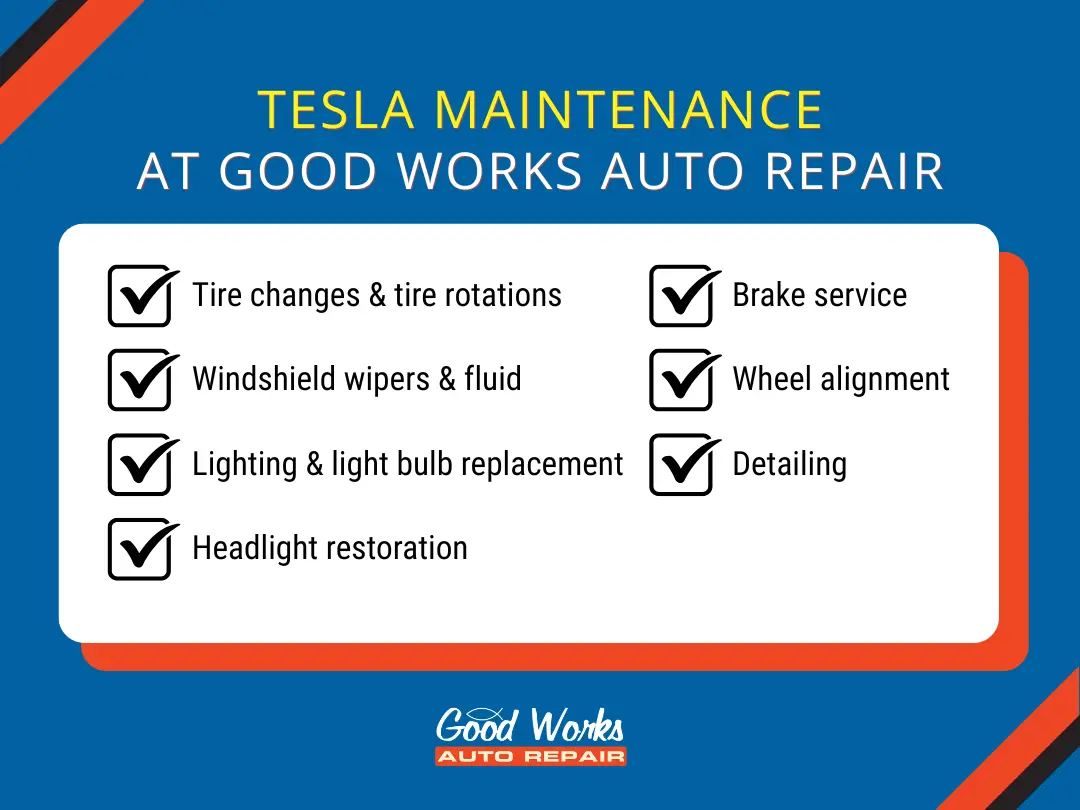
Good Works Auto Repair provides an independent option for several common Tesla maintenance services, including:
- Tesla brake service
- Tesla tire changes and rotations
- Tesla wheel alignment
- Windshield wiper replacement and washer fluid service
- Applicable lighting repairs
- Headlight restoration
- Vehicle detailing
Don’t Overlook Tesla Brake Maintenance Just Because You Have Regenerative Braking
Regenerative braking is one of the features that makes Tesla ownership appealing. It improves energy efficiency, reduces reliance on conventional friction brakes, and can extend brake pad life.
But remember … less brake wear doesn’t mean zero brake maintenance.
Your Tesla still depends on a properly functioning conventional braking system for safe stopping performance.
Keeping an eye on brake pad condition, rotor corrosion, brake fluid health, and unusual braking symptoms can help you avoid unnecessary repairs while maintaining your vehicle’s safety.
Schedule Tesla Brake Service at Good Works Auto Repair in Tempe, AZ
Does your Tesla have squeaky brakes, unusual vibrations, or another braking concern? Or would you simply like to have your vehicle’s conventional braking system inspected?
Good Works Auto Repair offers professional Tesla brake service and routine Tesla maintenance for drivers throughout Tempe, Mesa, Chandler, Scottsdale, Gilbert, and surrounding East Valley communities.
Schedule an appointment with us today and our team can help you understand your vehicle’s maintenance needs and determine which services are appropriate.
Schedule My Appointment Now!

Leave a Reply